A Telephoto Turns a Sea of Fog Into a Dozen Photographs
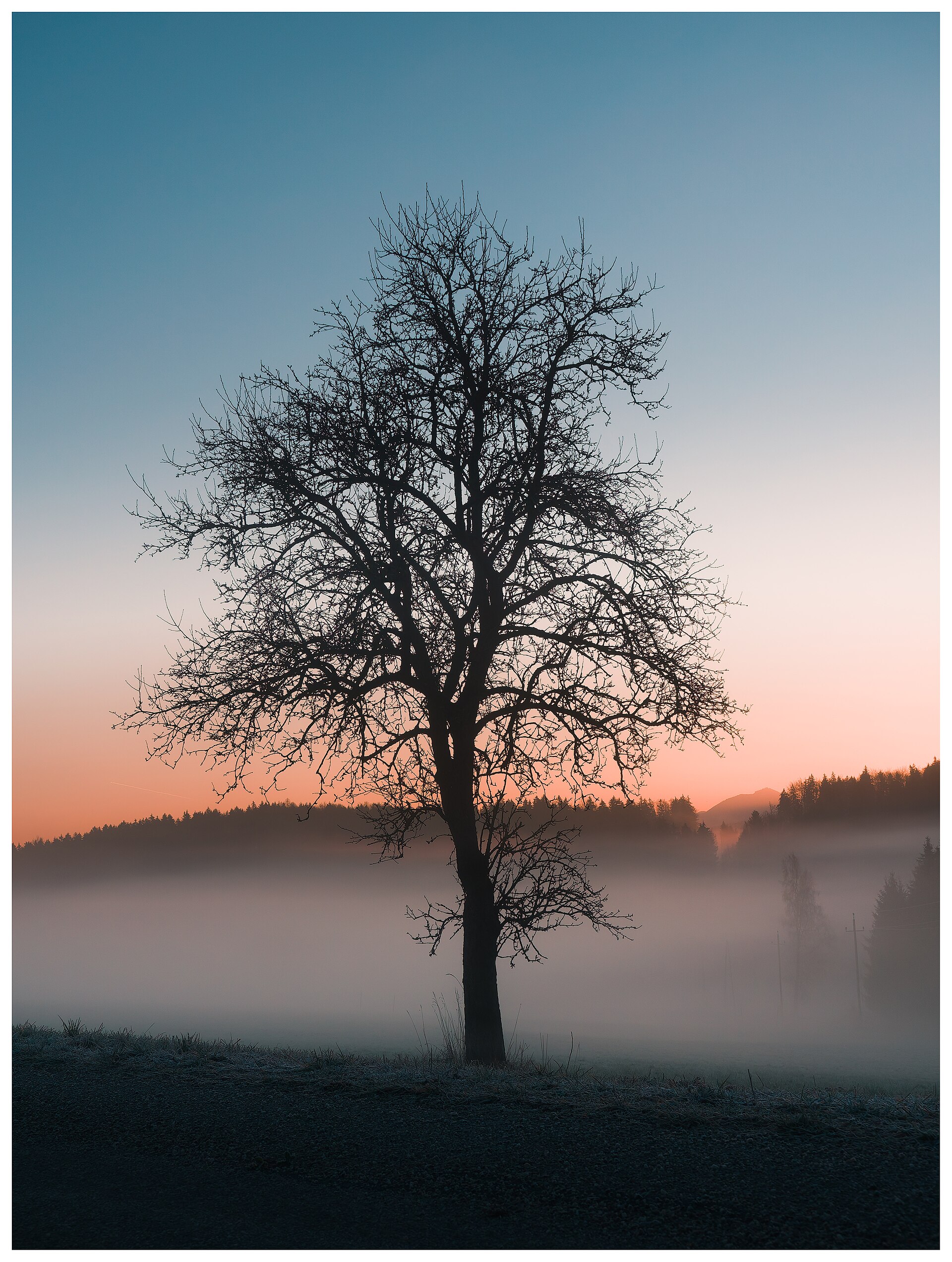
Why point a long lens at fog?
Fog from a wide angle is mostly one thing: a grey blanket with a horizon. Photographer Michael Shainblum works the morning and evening fog around the Bay Area almost entirely on a 100-400mm zoom, using the long end to isolate bits of tree line poking out of the marine layer. One ridge, one clump of treetops, one slow waterfall of mist spilling over a hill: each becomes its own photograph.
The compression does the work. Distant ridges stack into layers, and a thin strip of land above a larger one reads as an island in a white sea.
What settings actually matter when the scene is all mist?
Shainblum's shutter rule is simple: about double the focal length, so at 400mm he is near 1/800 of a second. That keeps the texture of the fog crisp and leaves him free to shoot handheld when the tripod slows him down. Aperture gets less thought. At f/8 with everything at infinity, the shot looks the same no matter which f-stop you pick.
For sunset he works facing a fog wave rolling in off the ocean, a circular polarizer on the lens. At roughly 90 degrees from the sun, a twist adds contrast to the sky behind the fog and to the detail within it.
How do you know the fog will be there before you set an alarm?
San Francisco's summer fog is advection fog: moist Pacific air passing over the cold California Current, cooling to its dew point, and getting drawn inland as the Central Valley heats up. It peaks from June through August, sitting beneath a temperature inversion that gives the fog its flat, defined top. The same setup makes valley fog, morning mist over lakes, and cloud seas in the mountains.
Cloud-base forecasts in apps such as Windy, along with GOES satellite loops, can help you guess whether a given overlook will be buried or sitting above the layer. And the fog moves fast: the first dramatic light of one morning lasted a few seconds, and Shainblum got exactly one frame out of it.
Why it matters for you
Fog is the cheapest way to learn what a telephoto is actually for. It removes the clutter, so the only decisions left are which slice to take and how the layers stack. Next time the morning is grey, take the long lens to the highest overlook you know and spend an hour pulling single ridges out of the white.