A Rocket Left a Glowing 'Space Jellyfish' Over Florida. Here Is How to Catch the Next One
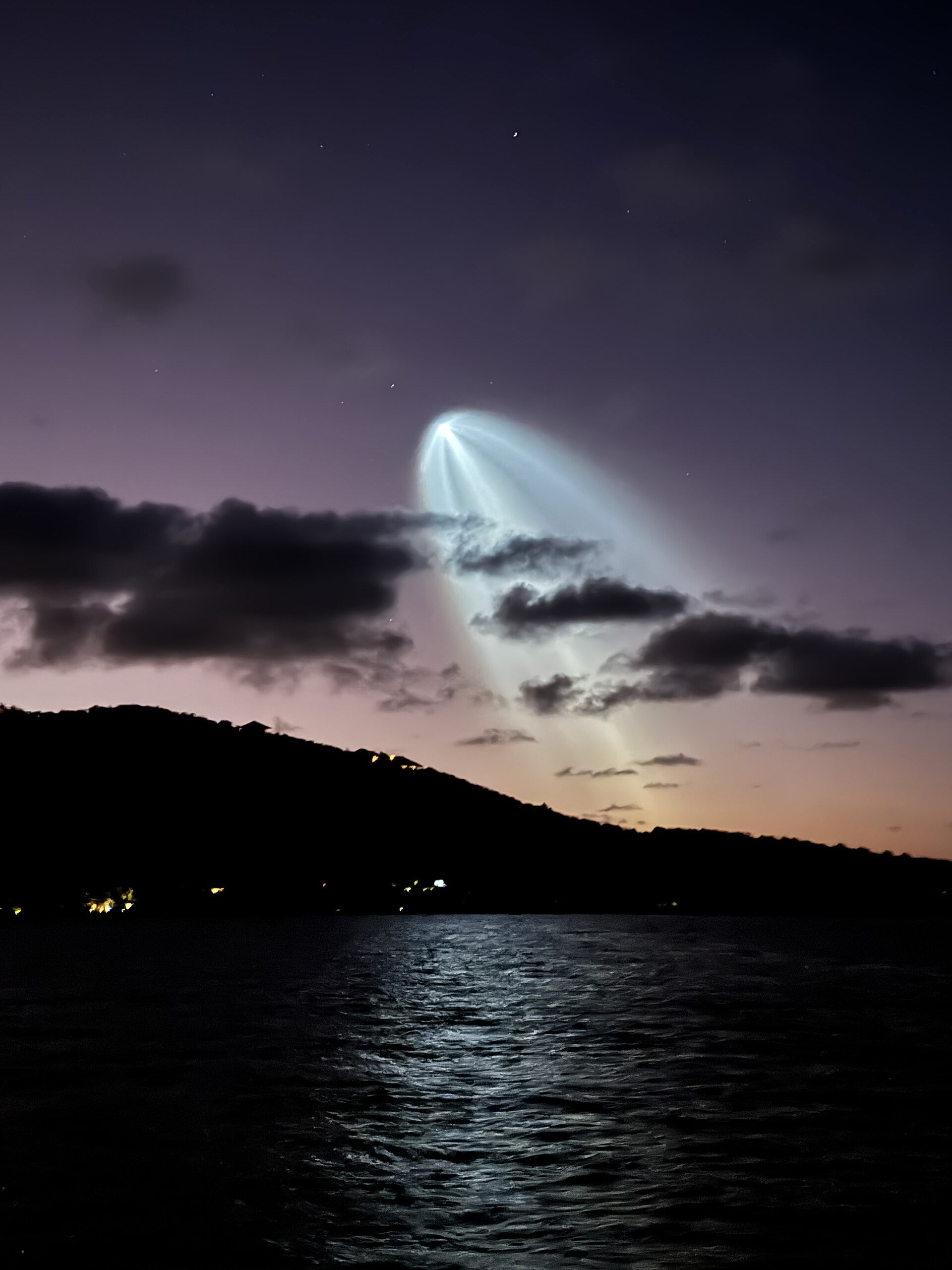
What is a 'space jellyfish', exactly?
On Tuesday morning, a SpaceX Falcon 9 lifted off from Cape Canaveral Space Force Station at 6:33 AM on the company's 35th commercial resupply mission to the International Space Station. As the rocket climbed through the upper atmosphere, sunlight caught its expanding exhaust plume while the ground below was still in darkness. The result was a glowing, jellyfish-like cloud hanging over Florida in shades of blue, orange, and pink.
NASA's explanation is simple physics: rocket exhaust interacting with the thin upper atmosphere, catching sunlight in the minutes before sunrise. The same thing can happen near sunset. NASA and SpaceX photographers documented it from multiple angles, and the images spread fast because the shape is genuinely strange, a sea creature drifting through the night sky that turns out to be entirely human-made.
How do photographers capture it?
The plume was visible far beyond Florida. People in Georgia and New York could see the spectacle, and photographer Gary Hershorn captured the same rocket hanging over the Manhattan skyline. That range is the first lesson: you do not need to be at the pad. You need a clear view of the sky in the right direction at the right minute.
The second lesson is that this is a planning game, not a luck game. Launches near dawn or dusk are published on schedules well in advance. Scout a foreground the day before, arrive with the tripod while it is still dark, frame wide enough to hold the whole plume, and expose for the glowing cloud rather than the black sky around it. When the timing lines up, the sky does the rest.
Why it matters for you
Rare sky events are some of the most shareable photographs a learning photographer can make, and this one runs on a timetable. There is another SpaceX Falcon 9 scheduled from the same location at the same early-morning hour on Monday, October 19 at 6:30 AM. Check the launch schedule, confirm it has not slipped, and set the alarm.
Bring your widest lens, a tripod, and a foreground you have already composed. The photographers who made this week's images were not lucky. They knew a rocket was going up at dawn, they were outside with cameras, and the sky cooperated. That is a repeatable formula, and Monday is your rehearsal.