He Shot a Newsweek Cover and Lost the Copyright
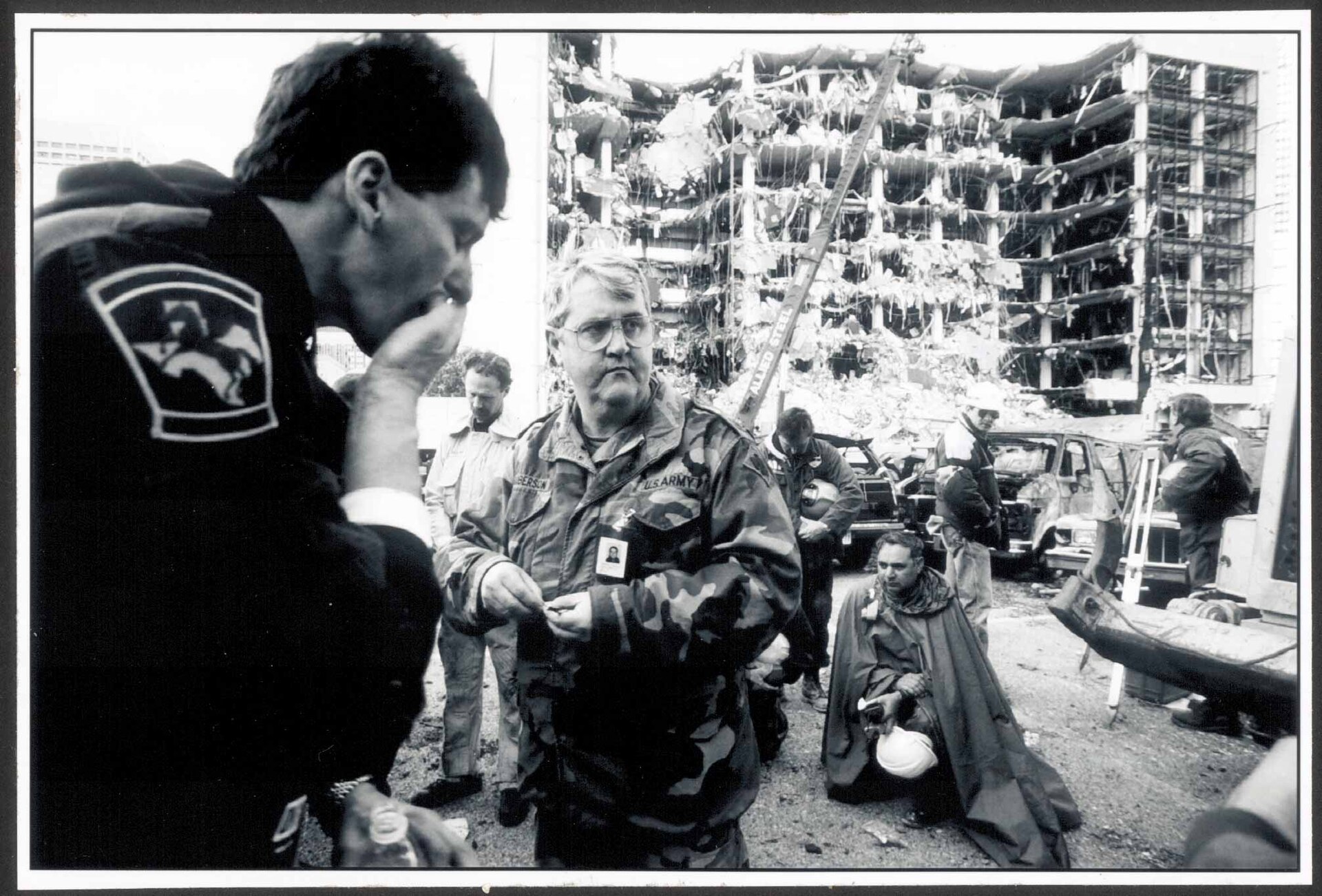
What happened on April 19, 1995?
Lester LaRue was the safety coordinator for Oklahoma Natural Gas, and photographing scenes was part of his job. When the Murrah Federal Building was bombed, he drove to the site in a company vehicle, on company time, with a company camera and film, and shot 44 frames. One, a firefighter cradling an injured infant, ran on the cover of Newsweek's May 1 issue.
About three feet away stood Charles Porter IV, a bank employee there on his own time. His frame reached the Associated Press the same day and won the 1996 Pulitzer for spot news. Two men, nearly the same picture, entirely different legal fates.
Why did the court say the photographs were not his?
Under the work-made-for-hire doctrine, when an employee creates work within the scope of employment, the employer is considered the author and owns the copyright, unless a signed written instrument says otherwise. There was none here. So the question was never whether LaRue pressed the shutter. It was whether he was at work, and every fact pointed the same way: the job included photography, the morning fell inside his working hours, and the camera, film, and processing were the company's.
The company gave him an ultimatum in September 1995: concede ownership and turn the money over. He refused, and was fired on September 8 after 32 years. The court awarded the company $34,623.50 and barred him from further use of the photographs.
What does this mean for a working photographer?
The test asks three things: whether the work was the kind you were employed to perform, whether it happened substantially within the time and space your job authorized, and whether you were acting at least partly to serve your employer. Whose camera you held is evidence toward those questions, not a separate question. Staff shooters can lose the same way, without a Newsweek cover to show for it. Freelancers fare better: a commissioned photograph counts as a work made for hire only in narrow categories, and only with a signed agreement.
The one lever the law leaves open applies to everyone. Ownership can be reallocated, but only in a signed writing, and the practical time to get one is before anything happens in front of the lens.
Why it matters for you
If you draw a paycheck and you take pictures, read your employment terms before your next shoot, not after your best frame. If an employer supplies the gear, the time, or the assignment, assume ownership is already in question, and get the answer in writing. The camera is yours. The copyright is a contract question, and contracts are cheapest before anything valuable exists.