Your Stabilization Rating Comes From a Shaker Table, Not a Hand
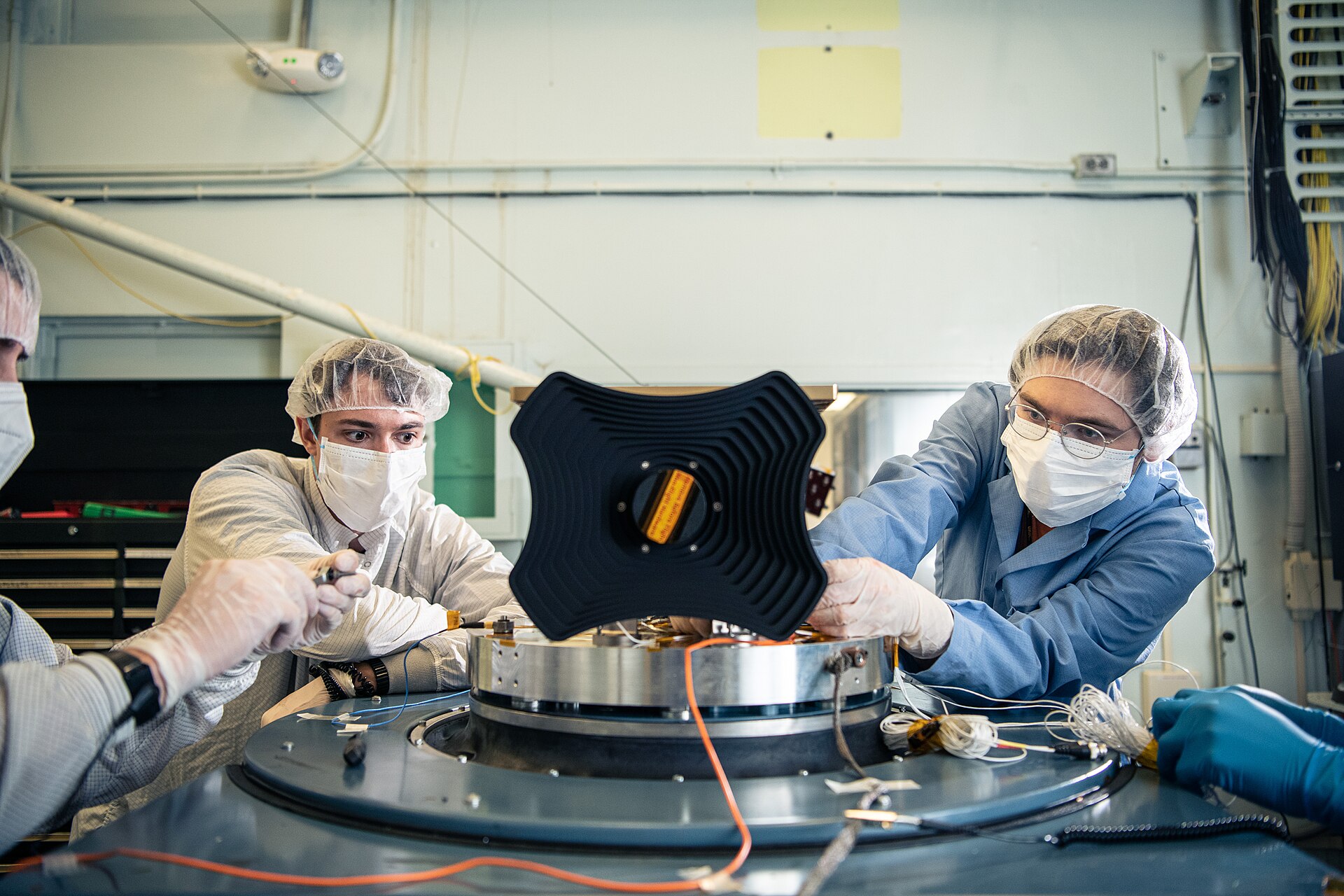
What does the stabilization test actually look like?
The camera does not get held. It gets mounted on a certified vibratory apparatus and shaken with a recorded waveform, 32 seconds of angle data at 500 Hz, driving yaw, pitch, and roll at once. The subject is a printed chart, and the camera sits 20 times its focal length away, so Canon's 105mm test was shot from about 2.1 meters at 23 degrees Celsius. The tester works through shutter speeds one stop at a time, 200-plus frames at each. Translational shake is dropped as negligible, and electronic stabilization is excluded entirely.
Why can't you compare ratings across brands?
The standard fixes the chart, the distance, the temperature, the waveform, the sample size, and the pass threshold, then hands the manufacturer the focal length and the lens. Canon rated the EOS R6 Mark III at up to 8.5 stops with an RF 24-105mm f/2.8 at 105mm, a lens with its own stabilizer working with the body. Nikon rated the Z5II at 7.5 stops with an unstabilized 24-120mm f/4. Sony rated the a7 V at 7.5 stops with an unstabilized 50mm f/1.2 prime. Three lenses, three focal lengths, three numbers not on the same axis.
What is the spec nobody quotes?
At the center of the image, roll produces no blur at all, because the rotation axis runs through that point. That is geometry, not engineering, so a center-only rating cannot tell you whether a system corrects roll. A body with sensor-shift stabilization is therefore rated at the center and at four corner points, and the corner figure is the only part of the rating that reports on an axis a lens cannot touch. Read the gap: the R6 III gives up one stop from center to corner, the a7 V one, the Z5II one and a half. It is worst where you notice it most, handheld dusk landscapes and night scenes braced against a railing.
Why it matters for you
Stabilization stops should not move a purchase decision between two bodies in the same class. The spread between competing bodies is smaller than the spread introduced by each manufacturer's choices, so an 8.5 and a 7.5 are not reliably a stop apart in your hands. Use the rating for what it can tell you: the corner number and the gap. And remember the limit no standard can fix: there is no subject in the test. Every stop past the seventh buys a sharper picture of nothing in particular when the leaves blur and the water blurs.