What a Star Timelapse Actually Teaches You About Gear
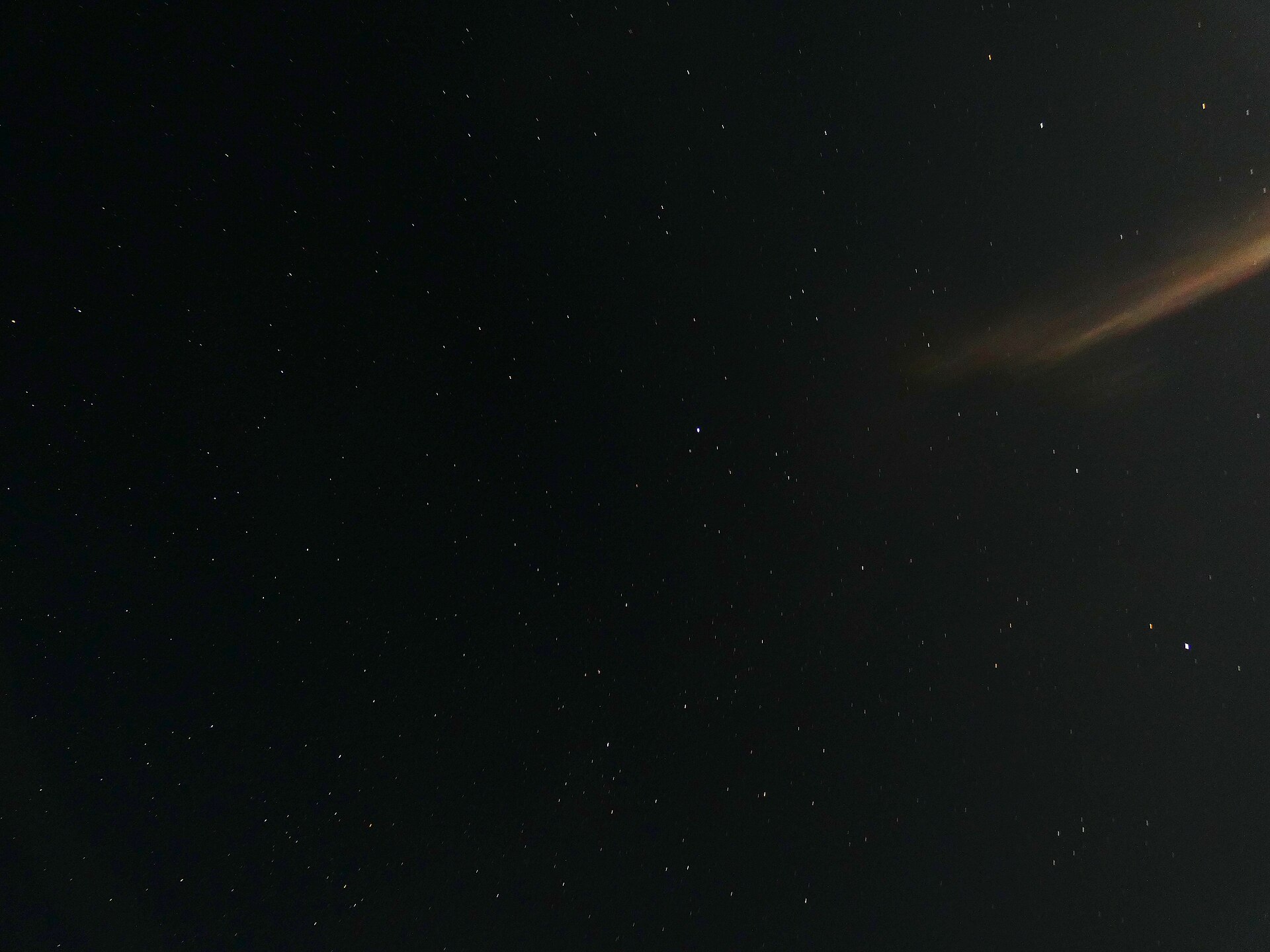
What does a star timelapse actually take?
A daytime timelapse is forgiving: foreground, tripod, intervalometer, and you can see what you are capturing. The night sky is different, because celestial motion is very noticeable. You either account for it or find a way to track it.
PetaPixel's Tim Coleman tested a tracking gadget in New Mexico, where an open sky, a new moon, and minimal light pollution made for perfect conditions. The iOptron SkyTracker Pro sits between the tripod and the camera and follows the Earth's rotation: line up Polaris through the polar scope with a companion app, set the hemisphere switch, and the motor spins at the speed of the Earth.
Did the tracker improve the footage?
The plan was to shoot the sequence with and without the tracker and compare, at f/2 with a 40-second interval. Then came the mishap: the ball head had been holding to the tracker mostly by friction, and over the long run it loosened, swung down, and came to rest at the bottom.
But it barely mattered. Where the tracker was working, the stars were crisp. Yet even after the head swung loose, the stars still looked sharp, because the test ran a relatively fast 15-second shutter, where the Earth's rotation barely registers.
How do you process the result?
In LRTimelapse Pro you grade exposure gradually across frames with keyframes. Even exposure throughout meant a single keyframe: nudged exposure and highlights, shadows watched so noise stays in check, a touch of saturation, clarity, and Dehaze. Then XMP into Lightroom Classic, auto transition, and render.
For export Coleman kept ProRes and dropped to 23.98 frames per second. The shoot was on 100-megapixel GFX100 II cameras, so he kept source resolution and reframed in post without losing apparent resolution on a 4K delivery. A nice bonus -- but the stars would look the same on far less.
Why it matters for you
Coleman's biggest lesson is the one that saves you money: you can capture beautiful star timelapses with just a lens, a camera, an intervalometer, and a tripod. Get your shutter speed and interval right, and you are most of the way there. Sometimes the unlock is an hour under a new moon with the gear you already own.