Depth Is Not the Blur
Why does blur no longer prove anything?
Blur used to be a credential. A creamy background meant a fast lens, a big sensor, a photographer who knew what they were doing. Then phones learned to fake it: Apple introduced Portrait mode on the iPhone 7 Plus in 2016, and now nearly every phone simulates shallow depth of field in software. A blurred background no longer tells anyone a picture was made with care.
That is the opening of photographer Max Kent's argument: if blur is free, what actually separates your work? His answer is light and layers. He calls a wide aperture the lazy version of depth, a shortcut that imitates the three-dimensional feel good light creates on its own.
How do you build depth without opening up?
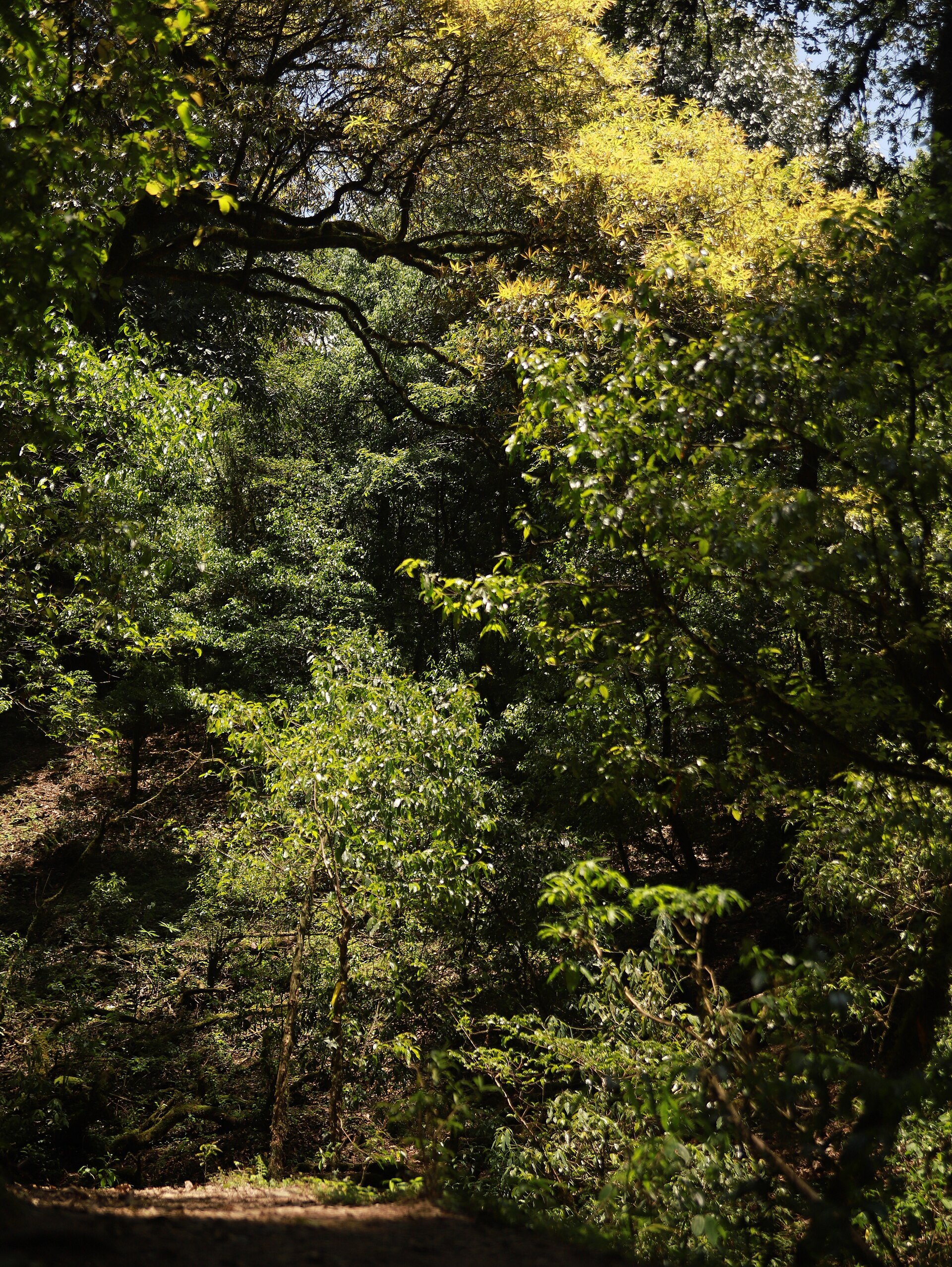
Start with light direction. Kent's recipe is soft light from roughly 45 degrees above and to the side, so bright and shadowed areas alternate through the frame. In his demonstration at f/2.8, most of the separation comes not from the aperture but from those bands of light and shadow. The same holds outside portraits: trees under flat light read as one surface, while the same trees under angled sun pick up shadows that pull each trunk away from the next.
Then add planes: a clear foreground, midground, and background. You know where each plane sits because you were standing there. A viewer sees only overlapping shapes, and that overlap flattens an image as thoroughly as flat light does. Get planes and light working together, Kent argues, and you can produce convincing depth at f/8.
His test is worth stealing. Convert a frame to black and white and shrink it to thumbnail size. If the subject still separates, the depth comes from tone and placement. If everything merges into one gray mass, the blur was carrying the image alone. One practical note: most lenses are sharpest between f/5.6 and f/11, and f/16 or f/22 brings in diffraction that softens fine detail.
Why it matters for you
This is not an argument against fast lenses. Kent still reaches for f/1.8 when it is dark or nothing else gives him separation. It is an argument against reaching for it first. Next time, leave the aperture at f/8, find the angled light, and build the layers. If the frame works, you made the depth.